October 14, 2025
Education
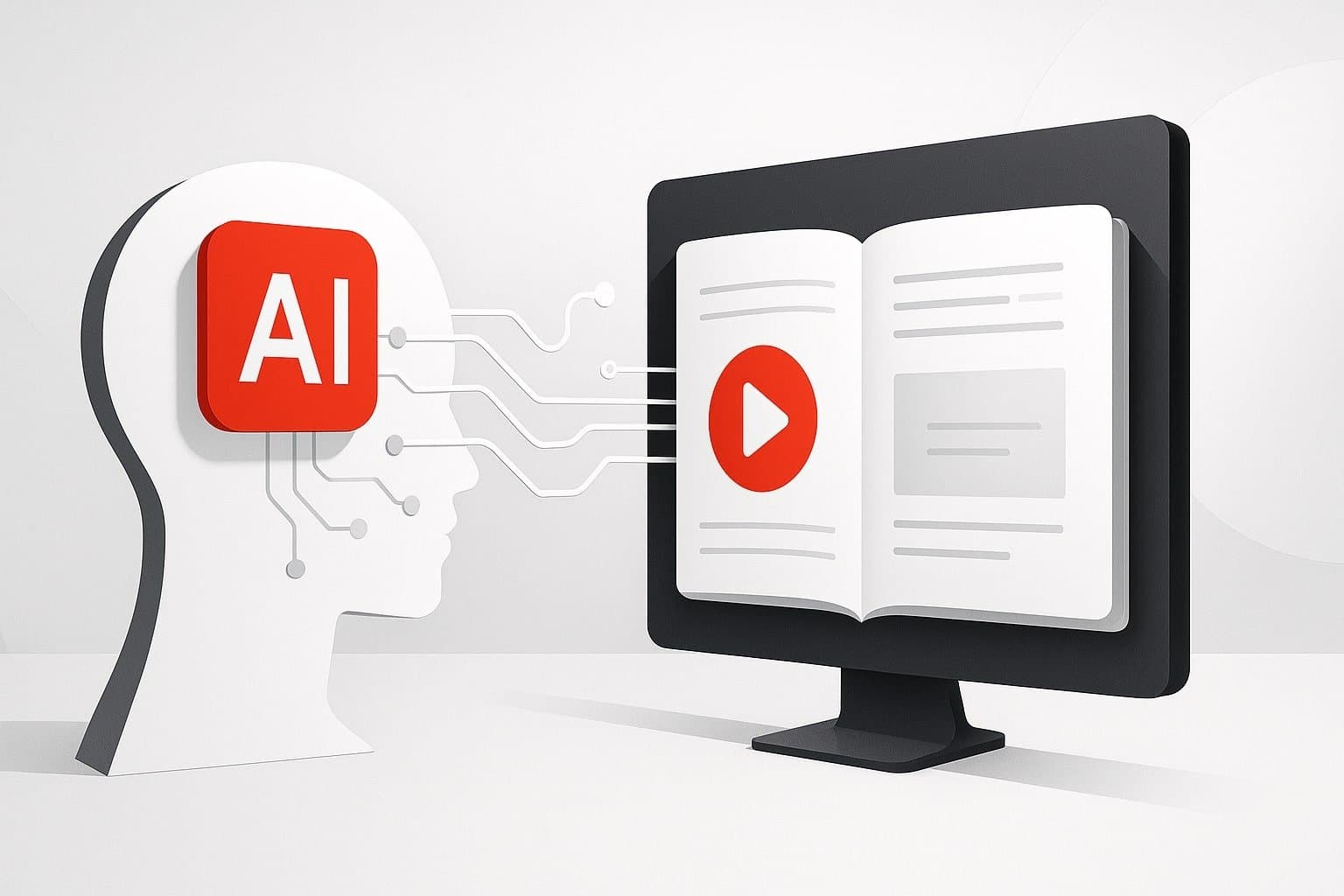
The year 2025 marks a turning point for education. Traditional e-learning platforms — once reliant on static video lectures and rigid content — are being replaced by AI-powered adaptive learning environments that think, respond, and evolve in real time.
At the heart of this transformation is Generative AI — technology that enables machines to create new, contextually rich content such as text, quizzes, lessons, or even simulations based on a learner’s needs.
Generative AI is not just making learning smarter — it’s making it personal, dynamic, and scalable across schools, universities, and corporate training programs.
Generative AI refers to systems capable of generating original content (text, visuals, code, audio) based on trained data and user prompts. In the context of education, it’s used to:
Unlike traditional automation tools, Generative AI models (like GPT-5, Claude, Gemini, and custom LLMs) can understand context, intent, and learning goals, making education more intuitive than ever.
One-size-fits-all education is officially outdated. Generative AI systems can now analyze a learner’s behavior, knowledge level, and pace to design individualized learning paths.
Example:
An AI-driven learning platform in 2025 can identify when a student struggles with data analytics concepts and automatically generate simplified explanations, examples, or mini-quizzes — all personalized in tone and complexity.
Impact:
💡 AI tools like OpenAI’s fine-tuned GPT models and Khanmigo by Khan Academy exemplify how personalized tutoring at scale is now a reality.
For educators and enterprises, content creation is one of the biggest bottlenecks in digital learning. Generative AI solves this by producing high-quality course material, summaries, and interactive exercises in minutes.
Applications Include:
Mini Case Study:
A corporate L&D team used ChatGPT Enterprise integrated with Notion AI to build a “Leadership Development” course. The system generated 80% of the initial content — saving 120 hours of manual work.
Imagine having an AI tutor available 24/7 — one that understands your progress, learning style, and questions. Generative AI makes this possible.
These AI tutors use natural language understanding (NLU) and retrieval-augmented generation (RAG) to provide relevant, accurate responses drawn from trusted educational sources.
Real-World Example:
Duolingo’s GPT-powered language tutor launched in 2024 has evolved into an intelligent conversation coach in 2025 — adapting difficulty levels and offering real-time pronunciation correction.
Business Impact:
Generative AI can now create immersive simulations where learners can practice real-world decision-making safely.
Examples Include:
Case Study:
A health-tech learning company built a generative simulation engine using LLMs and visual diffusion models. The platform generated unique patient cases for each trainee doctor — reducing training costs by 45%.
Traditional tests measure knowledge, but generative AI goes further — it evaluates understanding, reasoning, and creativity.
Capabilities:
Example:
Coursera’s AI feedback module uses generative models to grade open-ended answers and provide constructive feedback — helping learners understand why an answer is wrong, not just that it is.
Generative AI isn’t just revolutionizing learning outcomes — it’s reshaping business models for edtech companies, training organizations, and corporate academies.
⚙️ In 2025, AI-native learning platforms will gain a competitive edge by offering self-evolving content ecosystems — learning platforms that learn from learners.
While the promise is vast, leaders must address several challenges before integrating AI into their learning ecosystems:
Solution:
Adopt a “Human-in-the-Loop” approach — where educators guide, review, and refine AI outputs — ensuring quality and trust.
By 2026, we’ll see the rise of autonomous learning ecosystems — platforms that design, deliver, and improve courses without human intervention.
Emerging Trends to Watch:
The line between teacher, learner, and machine will blur — making education an ever-evolving, personalized dialogue.
Generative AI has moved digital learning beyond static lessons — it’s creating living, adaptive ecosystems that respond to each learner’s needs.
For businesses and educators, this is the moment to redefine learning strategies, integrate AI into content pipelines, and unlock personalized education at scale.
If you’re ready to explore AI-powered digital learning solutions, the team at MLab Innovations can help you build intelligent, scalable systems designed for the future of education.
👉 Let’s shape the next generation of learning — together.